
“The types of things that I collect are many and varied, mostly the things I like the look and feel of. I do a lot of this kind of artwork myself. As a consequence, I have a foot in both worlds – the world of the artist and the world of the collector.”
Phil Nuytten – Excerpt from an interview, April 2004, Vancouver Art Gallery
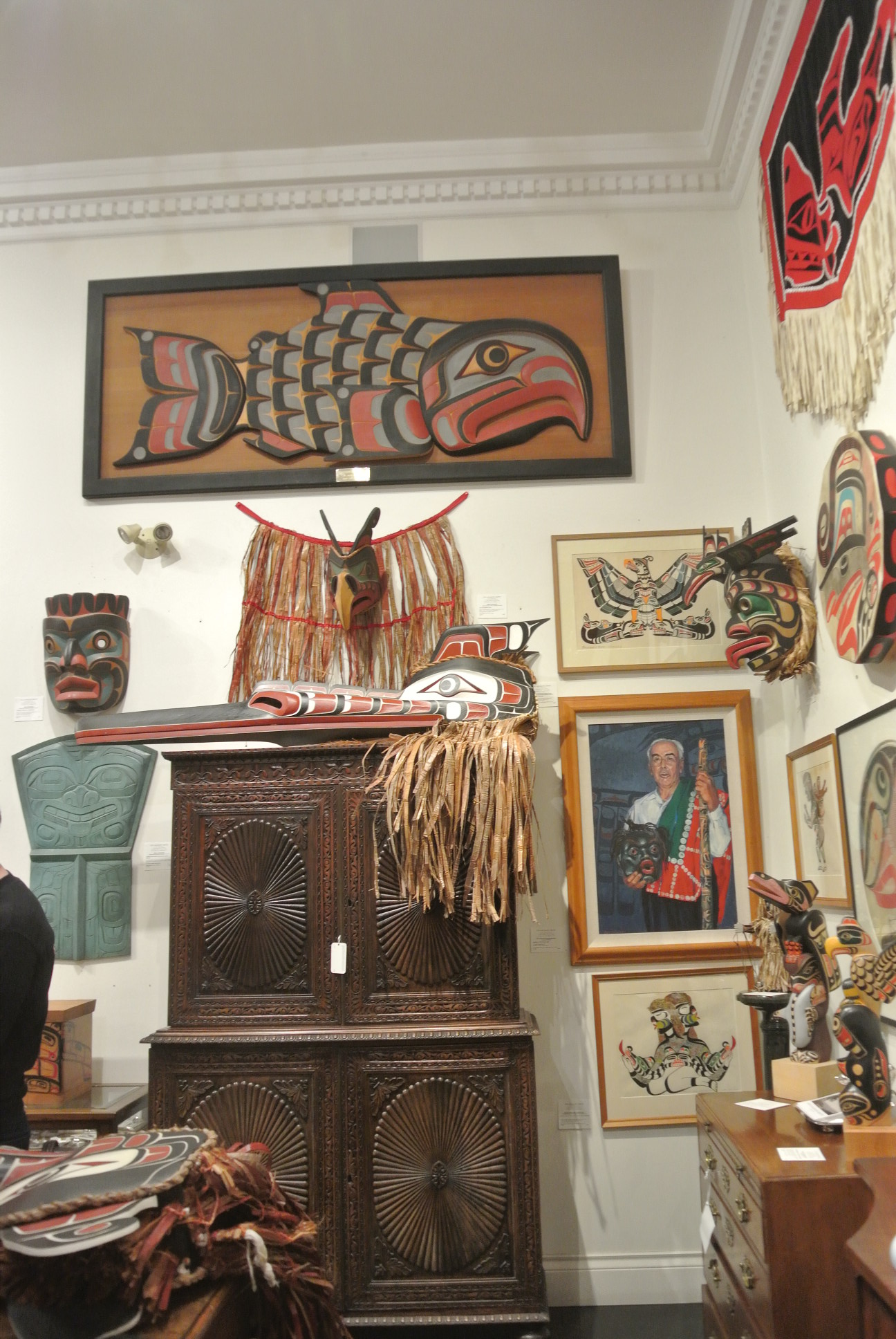
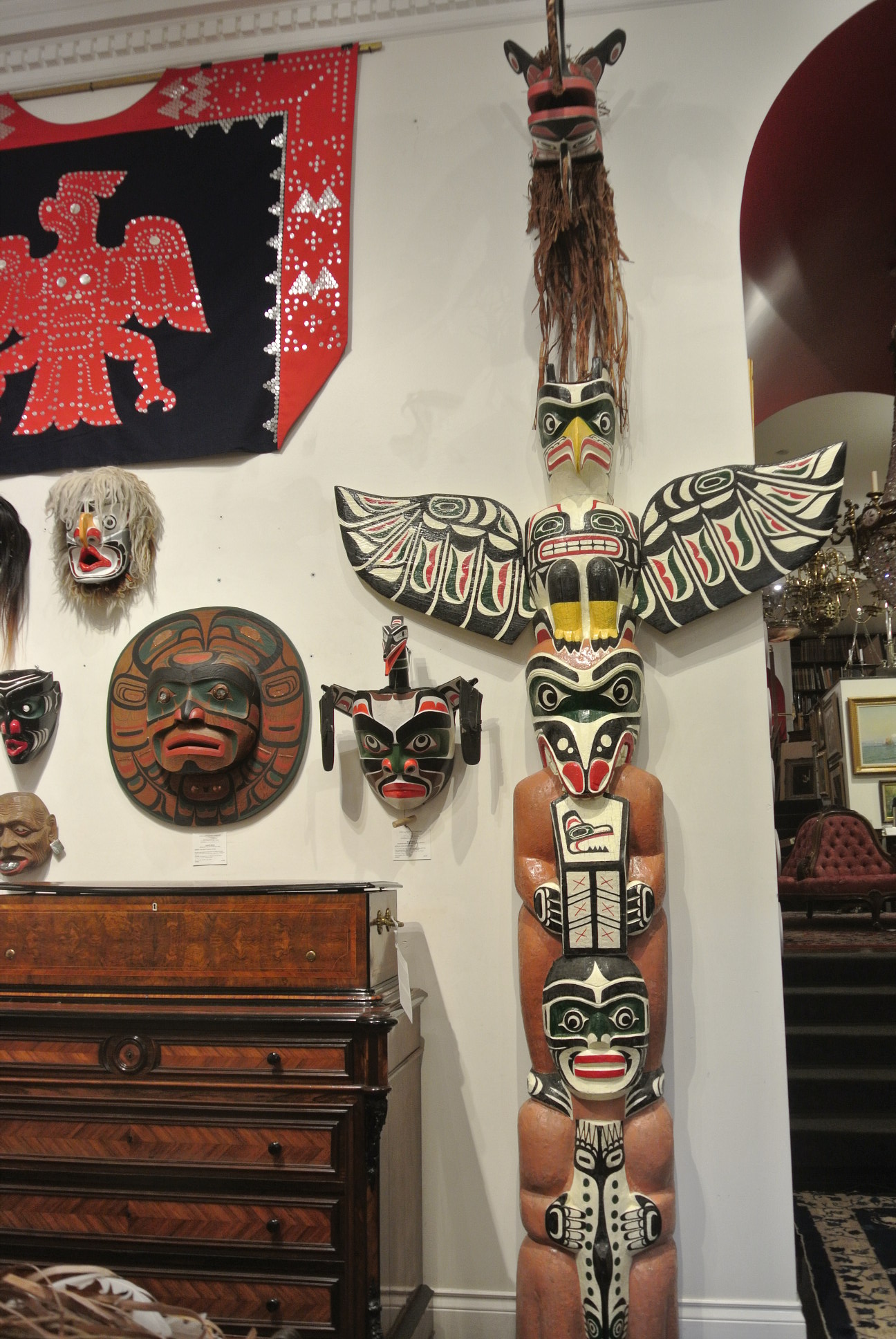
Standing off to the side, Virginia Cowell is quietly watching as people enter the centre gallery at Uno Langmann Ltd. in Vancouver, British Columbia (B.C.). Today is the opening reception for the gallery’s latest exhibition that features the Northwest Coast collection of her late father, Phil Nuytten (1941-2023). As well as featuring work by Robert Davidson, Beau Dick, Bill Holm, John Livingston, Dorothy Grant and Henry Hunt, the collection also showcases a rare collection of works by Charlie James, Mungo Martin, Ellen Neel and some of Nuytten’s own carvings and artwork.
“It is lovely but emotional,” says Cowell who spent that last several months working with the gallery’s Director, Jeanette Langmann to prepare for the exhibition. With over 1000 pieces from her father’s beloved collection on display, there is much to take in, especially with a full size totem pole welcoming people as they enter the room.
The totem pole is not for sale, but Cowell felt that it was essential to include it as part of the display. “I saw it as the heart of our home,” says Cowell who grew up with the pole in the entry hall that led to her family’s kitchen. It was such a formidable presence that whenever people came over, they would often rub the pole with their hands. So much so, that you can see the discolouration along the middle of the pole where houseguests had left their own mark on the pole over the years. “It is not the most practical thing to be keeping,” says Cowell, “but one of the most important ones to me.”

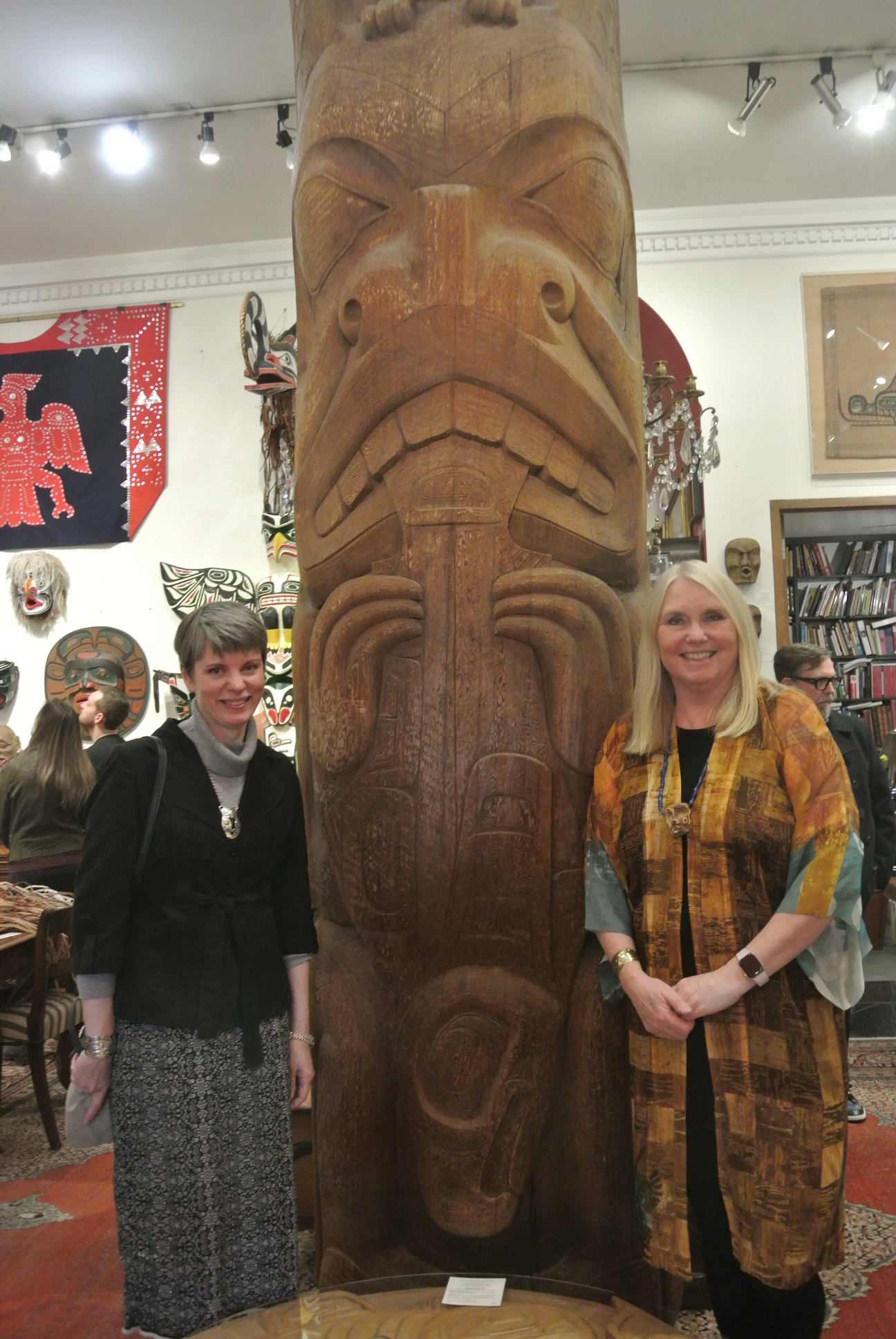

Mounting this collection was a true labour of love for both Cowell and Langmann, who knew Phil Nuytten quite well. “When Phil died,” says Langmann, “Virginia reached out and asked if we could help with the collection and talk about different options.” They felt it was important to keep the collection together as much as they could. As a result, the exhibition featured items that were being sold as well as some being kept by Cowell and a selection of rare pieces that were being sent to the U’mista Cultural Centre in Alert Bay and the Hand of Man Museum Natural History, Cultural Arts & Conservation Maple Bay, B.C.
In looking back at the process of planning the exhibition, Cowell was grateful to Langmann and her team. “I thought she did a fabulous job. It felt like it was when everything was in my parent’s house. Felt very much like it was loved.”
Nuytten’s collection spans several decades of collecting and creating his own art, starting as far back as the early 50s. At the tender young age of 11, several significant things happened around the same time that would have a profound impact on the rest of his life. He learned to dive, which launched a successful career as an underwater explorer and sub-sea engineer, inventor, tech manufacturer and entrepreneur. Also at the age of 11, Nuytten learned about his Aboriginal heritage on his father’s side, which inspired him to learn more about carving and to start his own personal art collection.

At that time, Nuytten and his family were living in a large house across from Lost Lagoon in Vancouver. They ran a restaurant on the main floor of the house called the Chilco Grill. Stanley Park was his playground but he also had a voracious appetite to learn and spent a lot of time at the Vancouver Public Library looking up books on diving and Native art. “At one point he asked the librarian about carving,” says Cowell. As it happened, the librarian knew a local woman carver and asked if she would be willing to speak to the young boy. “He got her name and address and ended up riding his bicycle over and knocked on the door,” says Cowell, “and asked if she would teach him how to carve.” The woman, who agreed to give him lessons alongside her own children, was noted Kwakwa̱ka̱ʼwakw carver Ellen Neel.


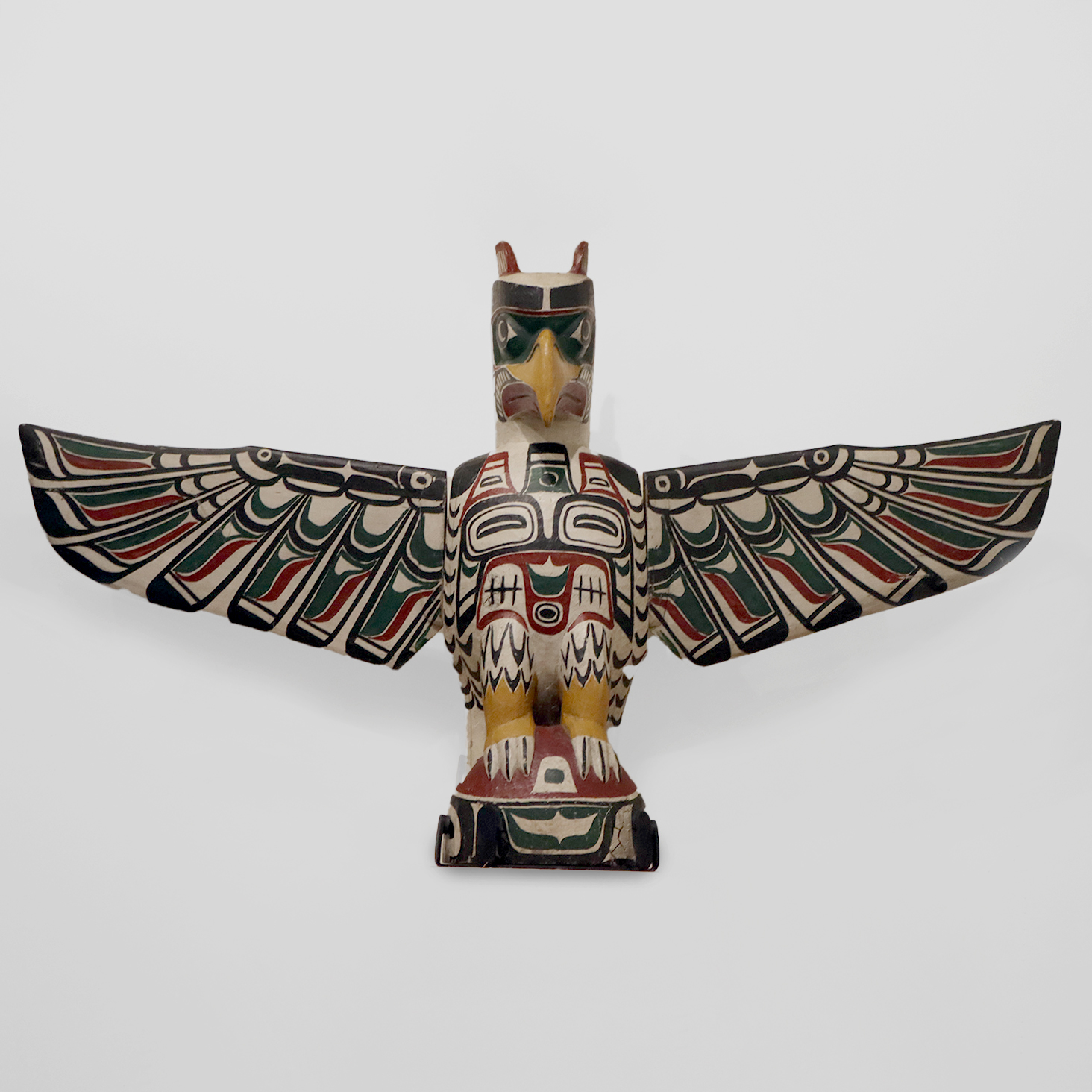
Through Neel, Nuytten honed his skills as a carver and subsequently met other artists such Mungo Martin, Charlie James and Amos Dawson. Over time, Nuytten became a leading authority on James, Neel and Martin. In 1982 he wrote the much acclaimed book on the three of them called The Totem Carvers. “They all came from Alert Bay,” says Cowell “and dad was adopted into the Dawson family in Alert Bay. It was a very special place for him and why it was important to him that some of the more culturally important pieces went to U’Mista.”
There is so much more to Phil Nuytten (e.g., he was also a cartoonist, storyteller and even a talented magician), but it was his passion for Northwest Coast art and artifacts that really comes through in this exhibit. “His being an artist really informed the collection,” says Cowell. “It’s nice to know that people appreciate what was important to him and that pieces of the collection would go forward and have new lives and new existences and this was just one step in their journey.” Cowell spoke to a collector at the reception who bought one of the masks. “He was very knowledgeable,” says Cowell. “I could literally see the face of excitement that I would see in my dad’s face.” And, that made all the difference for her. “After I left that day, I felt like this is really what should happen with the collection. Some pieces should go to museums and some should go to the people who will just love it.”
Reprinted with permission from Canadian Antiques & Vintage magazine. For subscription information to Canada’s only national antiques and vintage publication, please call toll-free 1.866.333.3397
Discover more from Secondhand Savvy
Subscribe to get the latest posts sent to your email.
 Secondhand Savvy